Location
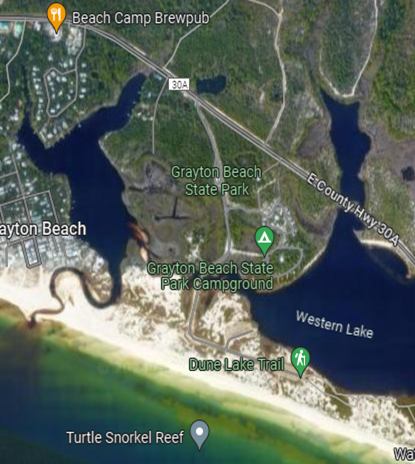
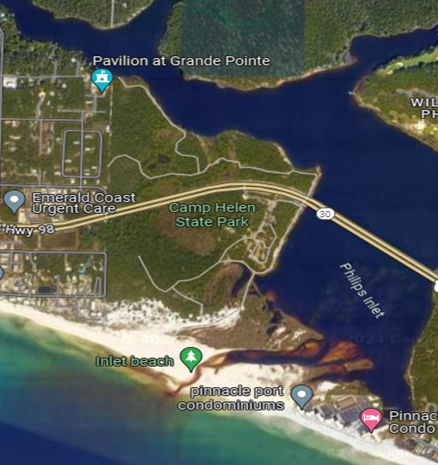
Walton and Bay County — State Park / County property access
Grade Level
Elementary, Middle, High school
Group Sizes
Limited to 25 participants. Parents must accompany their children. Children must be 5 years old or older.
Please Note
The trip at this time is designed to be completed from shore. Future trips may allow use of boats for Gulf of Mexico and Dune Lake sampling / comparison.
Objectives
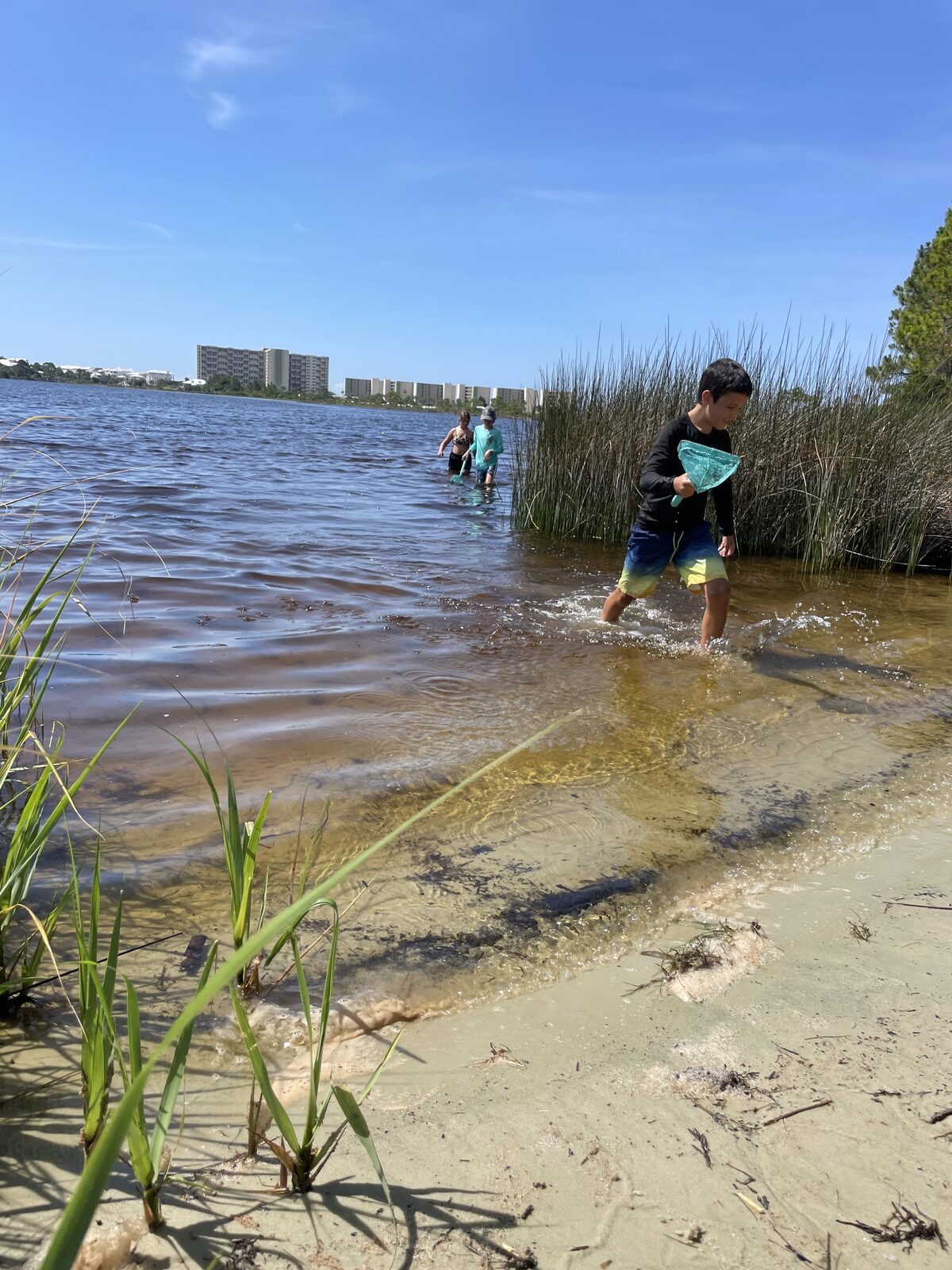
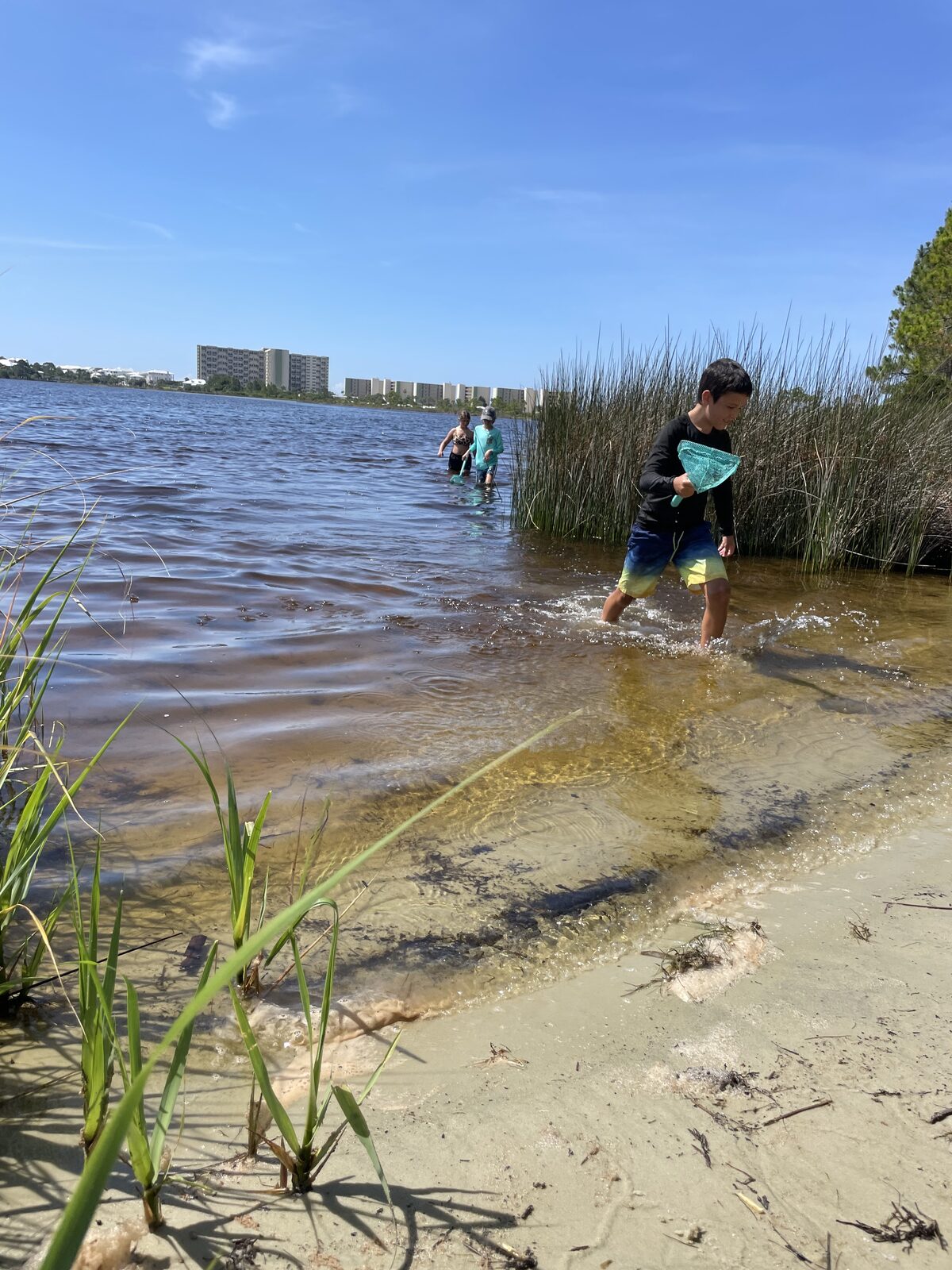
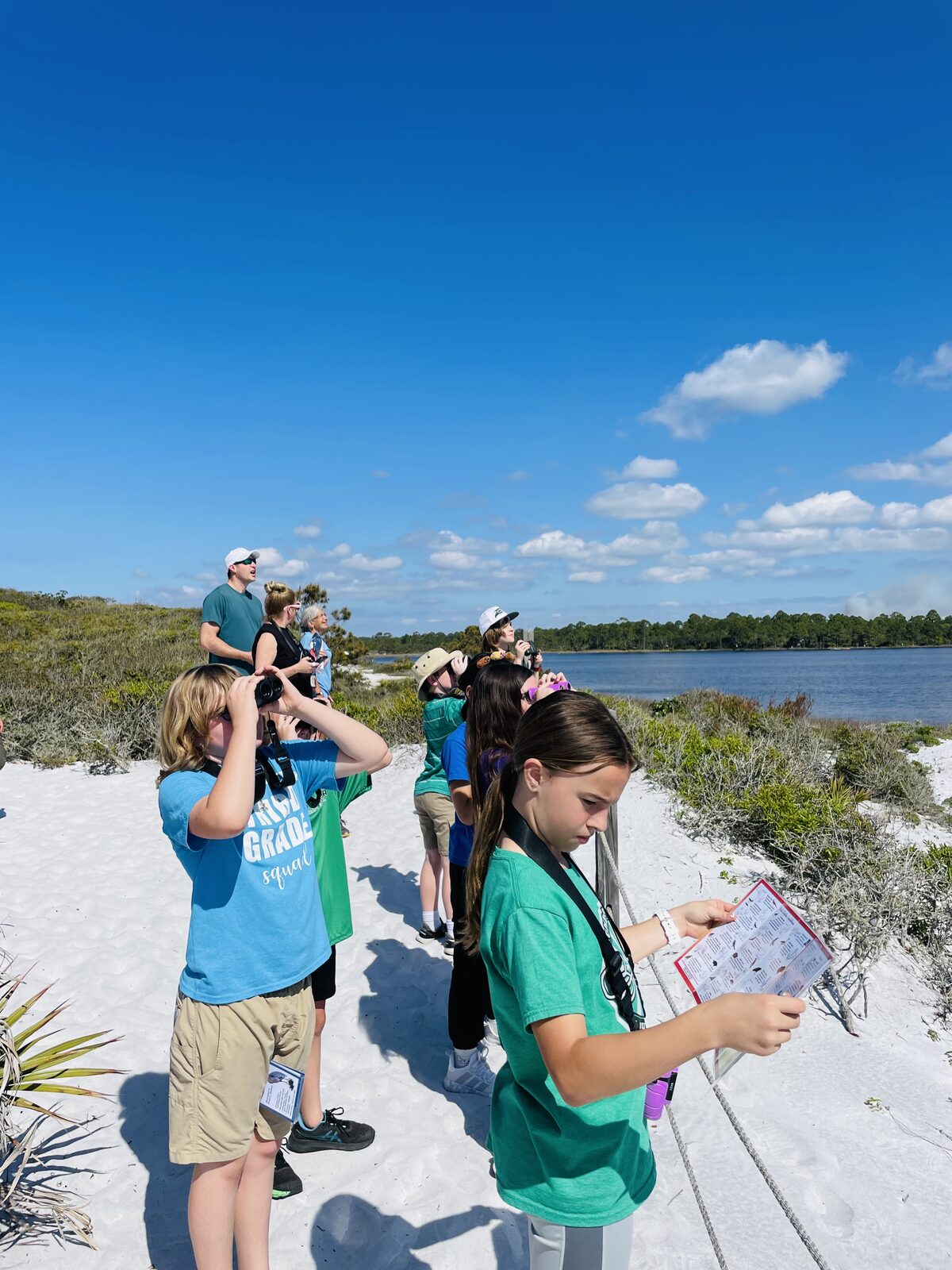
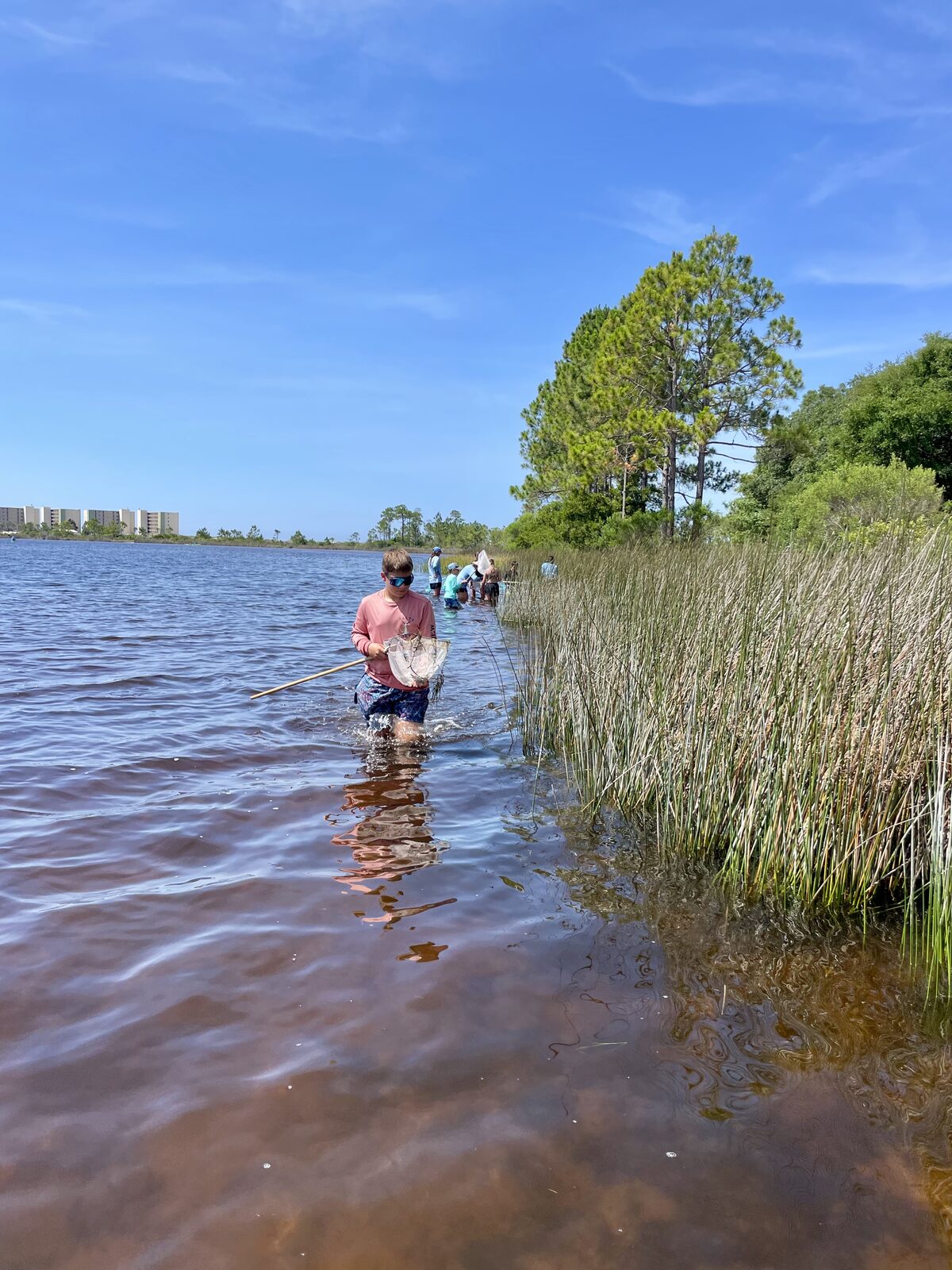
This field trip will center on the unique nature of the coastal dune lakes and contrast this habitat with that of the Gulf of Mexico. Activities will be hands on (and wet!) and include sampling, analysis / identification, and Q&A. Activities will focus on water quality; capture and identification of marine life; identifying and discussing exotics / nuisance species; looking at the critters you can't see (phytoplankton); observing ghost crabs; turtle games and discussion; taking the opportunity to look for and observe larger marine mammals, birds, reptiles and fish; and looking for and discussing stormwater, plastic, and other pollution impacts in the habitat and the implications to the larger ecosystem.
The focus will be for students to be able to describe the major physical, biological and ecological features of the unique nature of the coastal dune lake during the field trip and discuss their solutions to man's impacts. The discussion and salient points taught will be based on the grade level of the class.
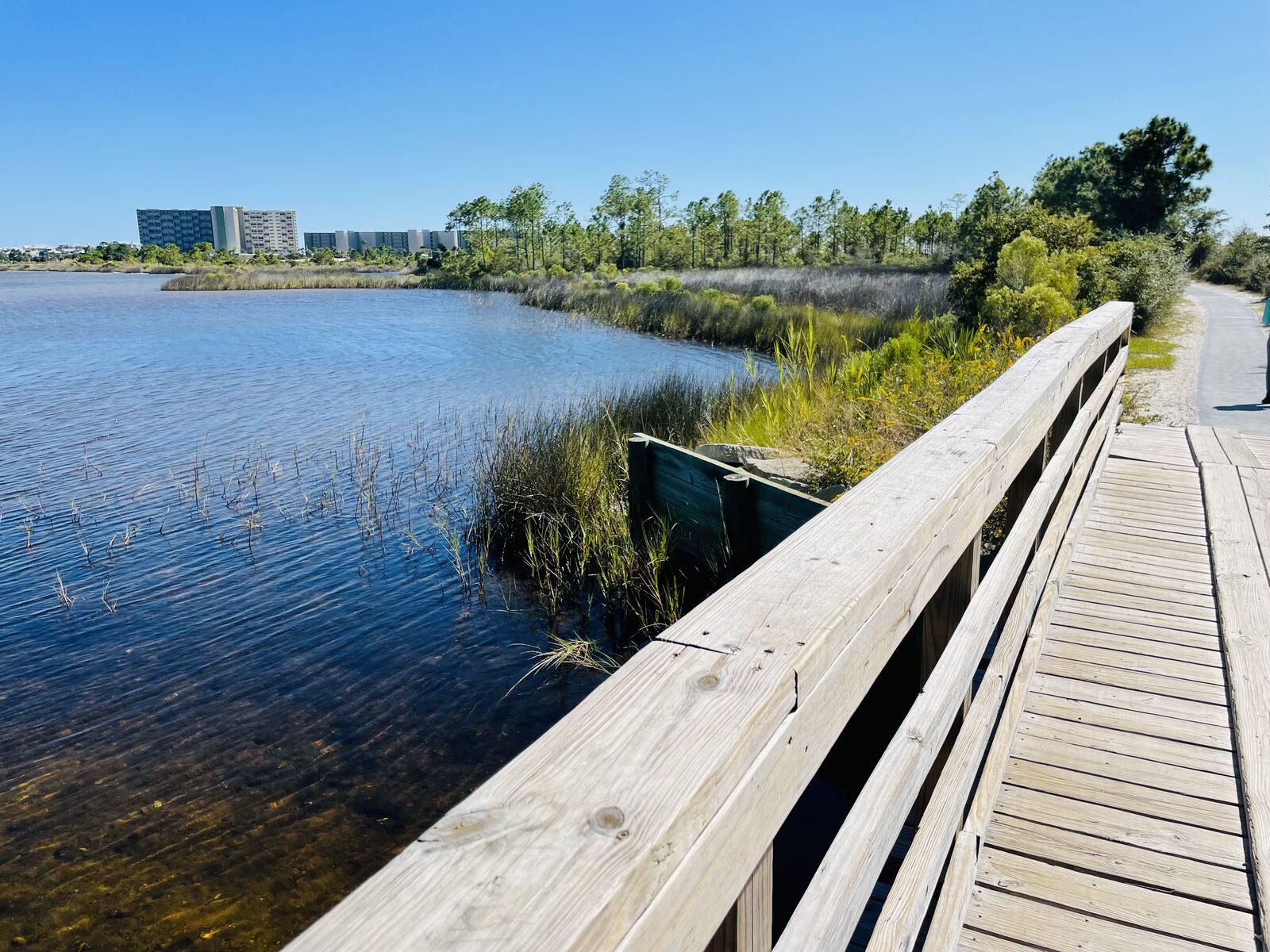
Coastal dune lakes are unique to the Florida Panhandle and found in only one other place in the world. We will explore the ecology of these lakes to reveal why they are so unique and important.
Background
Coastal Dune Lakes provide an opportunity to study many marine science and freshwater concepts in one location. Coastal dune lakes have a unique physical environment that has led to species adaptations that can be seen and contrasted with those found in the Gulf of Mexico. An emphasis will be made to distinguish the freshwater, brackish and salt water species, the adaptations the organisms have made to these lakes, and the issues that can affect their survival.
Participants will carry out sampling activities, observations, and data collection to learn the basic structure of the habitat, how to identify the organisms, the interactions between species, and to help them understand species roles and adaptations to the habitat. Sampling in the Gulf of Mexico shoreline will allow participants to compare and contrast the two habitats. Distinctions will be made to help understand how organisms adapt to the habitat and the physical and biological factors that influence those habitats.
Sample Itineraries
½ Day
The group will explore the habitat through Water Quality and Explore The Marsh activities. Field Adventures for the Community would entail the same two activities, and the start time would be dictated by the group that signs up.
Full Day
Field Adventures for the Community participants also have the option of 2 activities beyond the core activities:
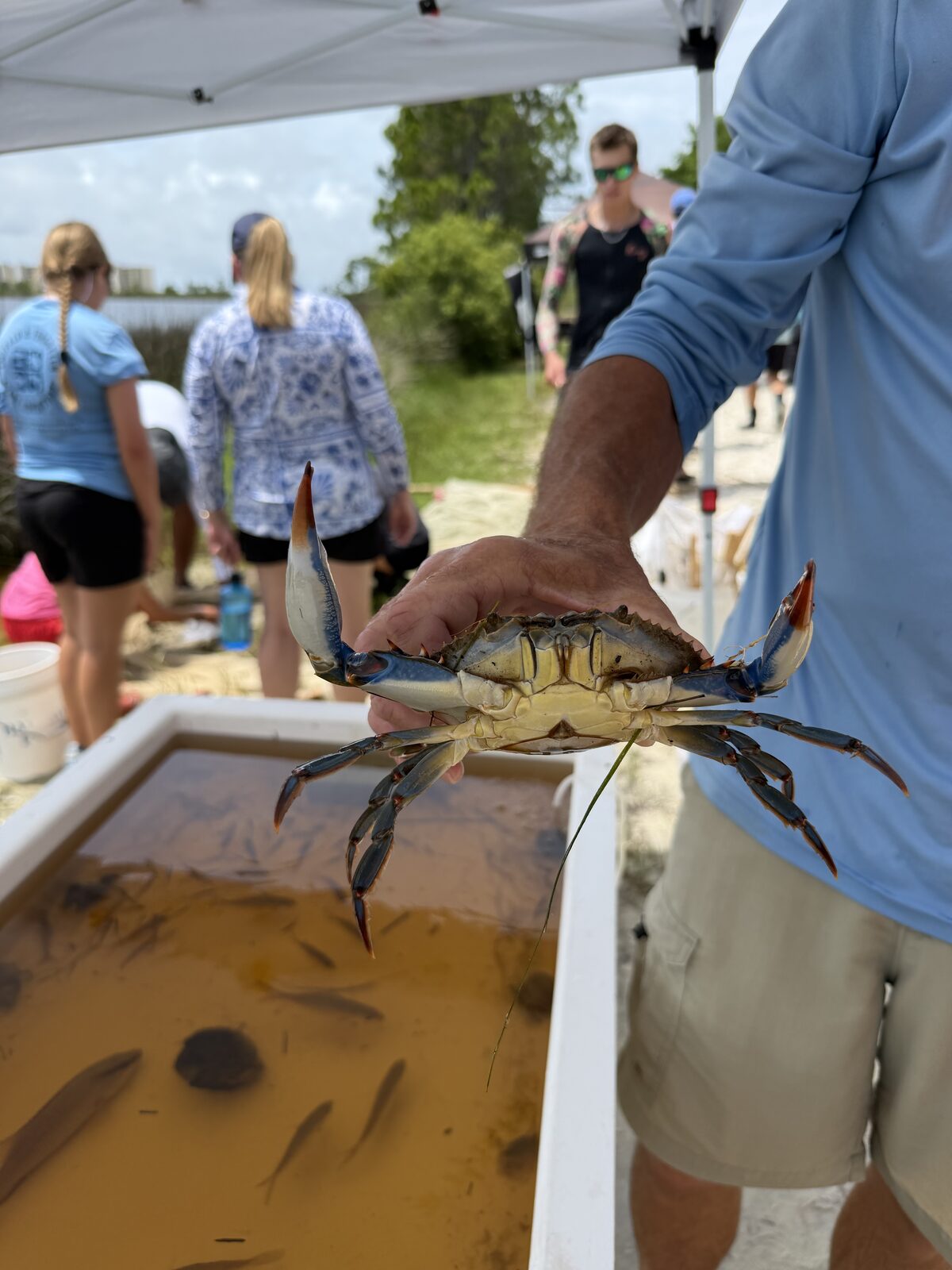
- Blue Crab Observations — Staff will teach participants about the anatomy and behavior of the blue crab and its role in the salt marsh — while trying to catch some!
- Why Does the Mud Stink So Bad? — Using sediment cores, staff will reveal the layers of sediment in the marsh, why it stinks so bad, and why it is so important to the critters.
- Critters the Eye Can't See — Using microscopes and large picture guides, participants will look at the critters caught in plankton nets by the staff to learn about these important critters.
- Funny Fiddlers — Fiddler facts will be observed both in specimens in aquaria and in the marshes.
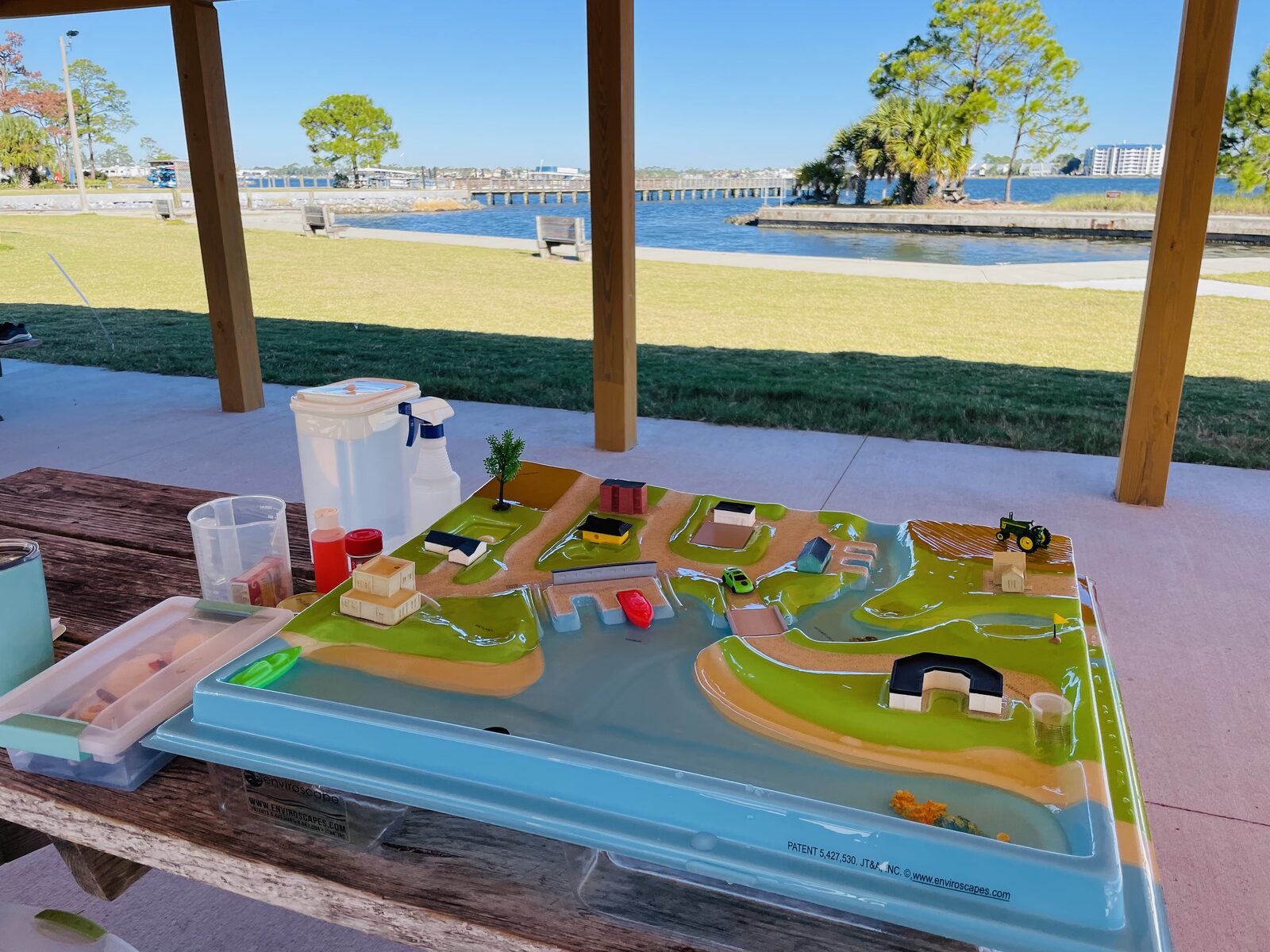
- Where Does the Water Go? — Using a miniature model of a watershed in the field, participants will examine what happens to pollutants and floods caused by increased surface runoff.
Depending on the mix of ages, participants will be broken up into smaller groups by age. Stations will be set up and each activity tailored to the ages within each group.
On the Adventure
How to Book
Choose your field adventure! Pick your date below on the calendar and register online. You can also call 850-508-7306 Monday – Friday 8:30 AM to 5 PM to have your questions answered and book your trip.
Student's costs will be covered by grants and donations, but we will need a firm headcount for each trip. For Field Adventures for the Community (residents and visitors), donations will be required to cover the costs of staff and equipment use and to support E&FCA's efforts during the school year. The costs will be calculated on a per person basis during booking.
Your donations will help science teachers hone their skills during the summer by leading adventures and will help bring more kids into the field during the school year! We much appreciate your contributions!